 Ripple
A business day, in order.
A hotel does not run on calendar days. It runs on a business day that opens, absorbs everything that happens, and closes — and the close is what makes the numbers mean something.
The day opens
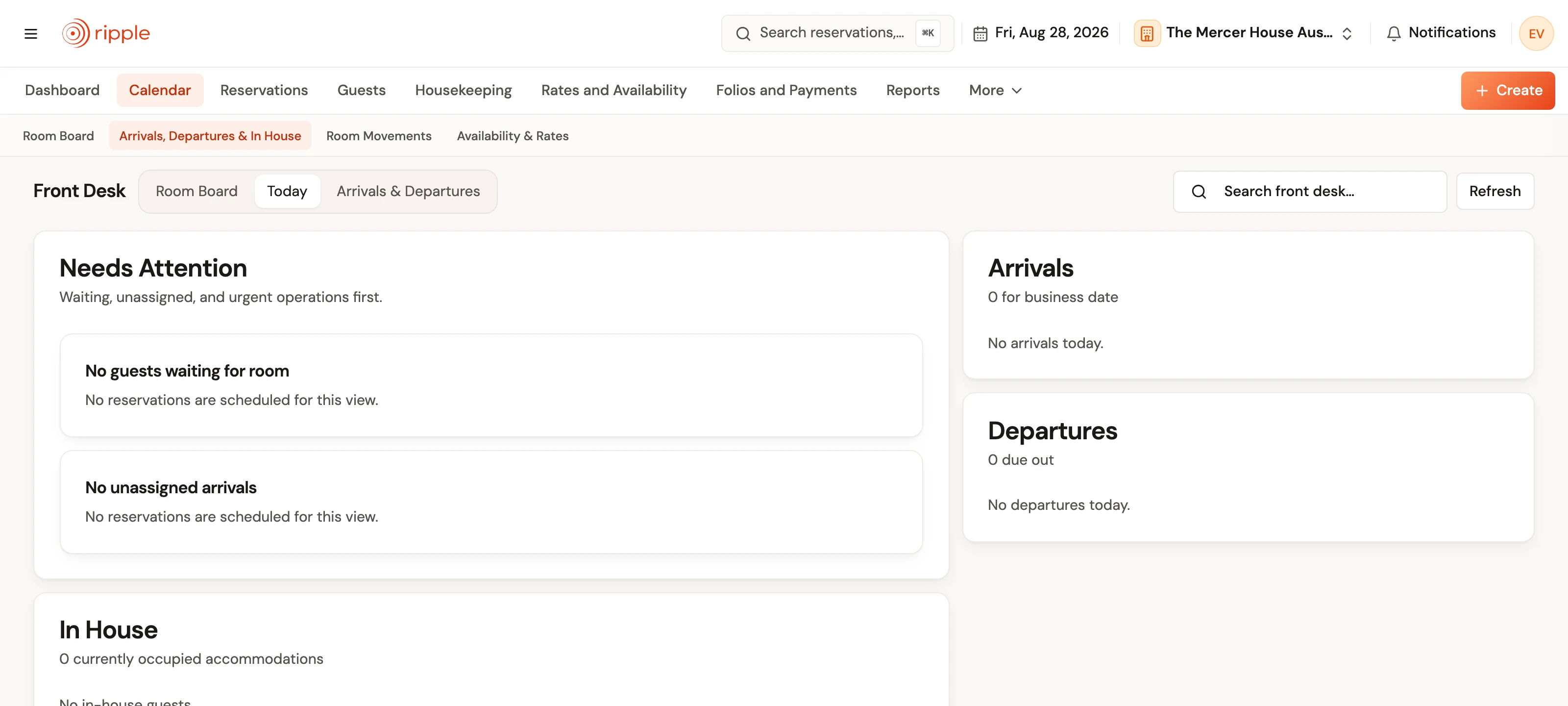
Arrivals, departures and in-house are the day’s work. Unassigned arrivals are visible as unassigned, so a room gets found before the guest is standing at the counter.
Guests check in
The stay becomes occupied, the room state changes, and the folio opens. Anything already taken as a deposit is already against it.
Charges accumulate
Room charges, extras and adjustments post to the folio through the day. Financial activity is recorded as an append-only history rather than edited in place, so a correction is a visible entry rather than a silent change.
Guests settle and depart
Payment is taken against the folio at the counter, the balance closes and the room drops to dirty for housekeeping to pick up.
The night audit closes the day
The business day is rolled forward. What was true at close stays true: the audit is a boundary, not a draft — there is no un-close, so the day’s figures are a settled record rather than something that can quietly change afterwards.
The folio is at the counter, not in the back office.
The person checking a guest out can see what was charged, what was paid and what is outstanding, and take the payment there. No second system, no reconciliation later, no printed sheet with a balance somebody has to trust.
- Charges, payments and adjustments against the stay
- Card payments taken on your own terminal and recorded against the folio
- Corrections recorded as entries, so the history stays readable