 Ripple
Every property gets the same Ripple. What changes between them is which part of the day hurts most.
A forty-room boutique and a four-property group are not running different systems here — they are running the same operating record with different pressure on it. One is fighting turnover on a Sunday changeover; the other is fighting four sets of rates that nobody can see side by side. The pages below are about where the pressure lands, not about which tier you buy.
Where Ripple fits.
Five operating shapes, and the specific thing Ripple is doing for each of them. If your property is not on this list, it is worth a conversation rather than a guess.
Independent hotels
One property, one team, no head office to absorb the admin. The board, the arrivals list and the folio are the whole job, and Ripple puts them in one place rather than three tabs and a spreadsheet.
Boutique and design-led properties
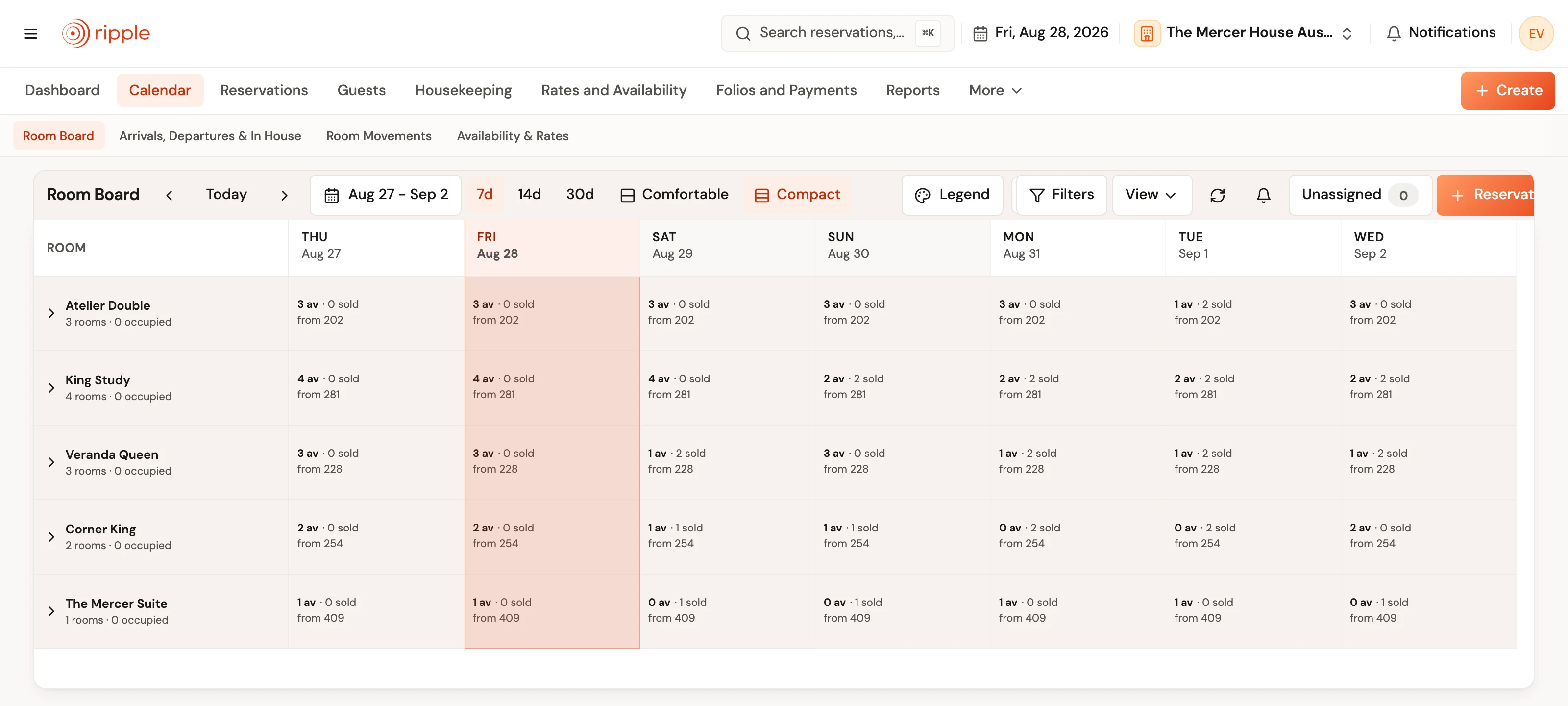
A small room count where every stay is visible and the rate is a judgement, not a formula. Ripple keeps the rate calendar and the restrictions somewhere a manager can actually reason about them the night before.
Small groups and collections
Two or more properties under one operator. Each property keeps its own board, its own rates and its own housekeeping, while the people who run all of them get a single sign-in and a consistent way of working across the estate.
Serviced apartments and aparthotels
Longer stays, mid-stay servicing and unit types that behave less like rooms. Ripple handles multi-night stays and the housekeeping schedule that goes with them without pretending every arrival is a one-night transient.
Guesthouses, inns and small lodging
Where the owner is often the operator. The parts of Ripple you need on a Tuesday morning — arrivals, departures, who has not paid — are reachable without training on the parts you do not.