 Ripple
A hotel website goes out of date in a specific order, and it always starts with the rooms.
The general manager knows the suite has been refurbished. The revenue manager knows the winter offer ended. Neither of them can usually change a word of the website, so the site drifts away from the hotel until a guest arrives expecting something that no longer exists. Putting the site in the operator’s hands is not a cost saving. It is what keeps it true.
Distribution
Composed from sections, not from a blank page.
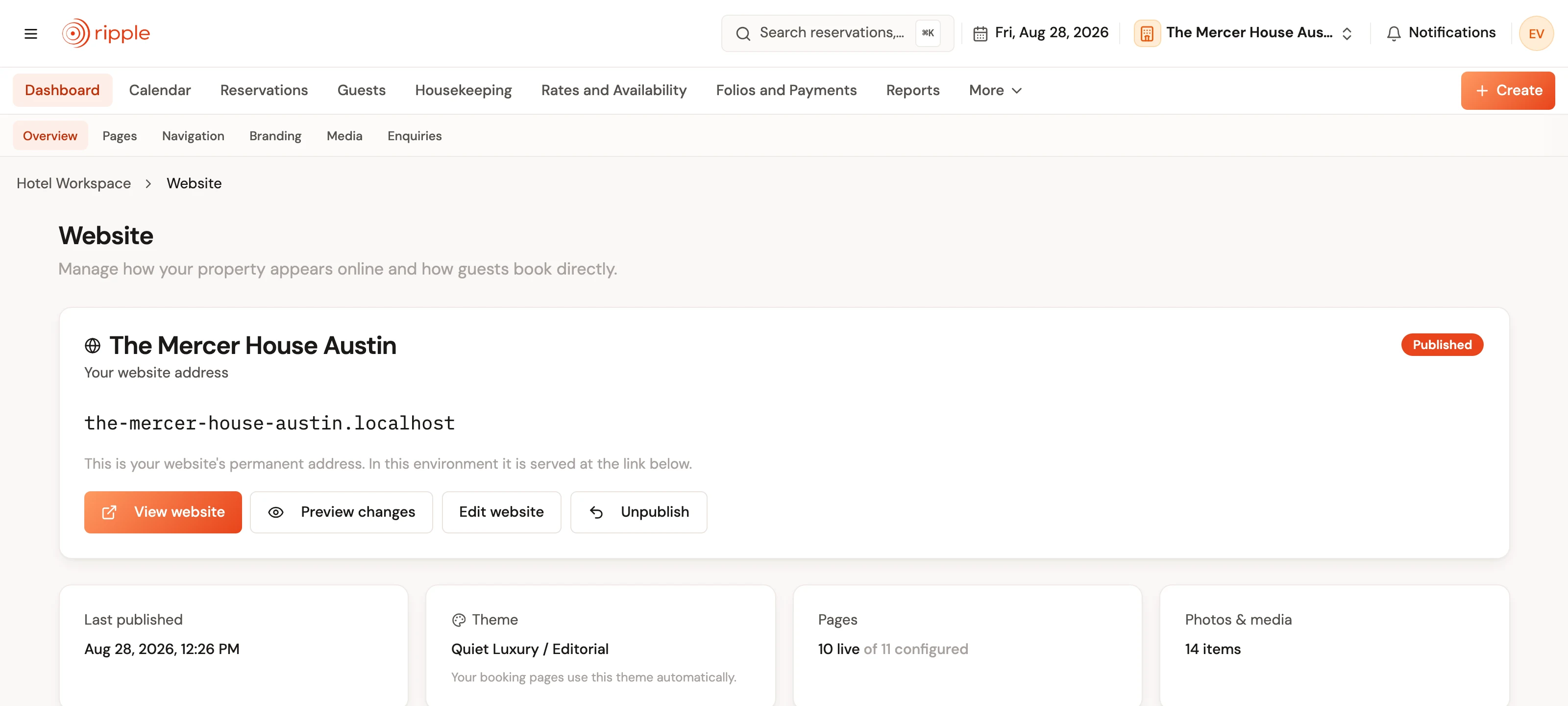
Pages are built from a governed set of hospitality sections — rooms, dining, facilities, offers, the property itself — so the site stays coherent no matter who edits it. Nobody is choosing fonts, and nobody can break the layout.
- Room, dining, offer and property sections designed for hotels
- Edited by your own team, with a preview of exactly what publishes
- Media managed in one library rather than emailed to an agency
What changes when you own the site.
Three practical differences, rather than a redesign.
- The rooms on the site are the rooms you sell
- Room types come from the property record rather than from a copy somebody typed into a template two years ago.
- An offer can go up the day it is decided
- A last-minute rate or a shoulder-season package is publishable in the same hour it is agreed, which is the only hour it is worth publishing.
- The booking path is not a hand-off
- Book leads into the Ripple booking engine reading the same inventory, rather than to a third-party page that looks like a different company.